

The right hearing protection for shooting helps you stay safe and focused when you shoot. Gunshots are very loud and can hurt your hearing forever, even from one shot.
Shooters sometimes do not realize they need hearing protection for shooting with smaller guns. This can cause hearing loss. You should use hearing protection for shooting with all guns to stop hearing damage from building up.
Many shooters wait too long to get better gear. Think about what you use now. Does it fit you well? Do you wear it every time you shoot? Buying good hearing protection for shooting keeps your hearing safe for your whole life.
Key Takeaways
-
You should always wear hearing protection when you shoot. It does not matter how big or small the gun is. Even small guns can hurt your hearing forever.
-
Pick hearing protection with a Noise Reduction Rating (NRR) of 25 or more for most shooting. If you use louder guns, choose an NRR of 30 or higher.
-
Try using both earplugs and earmuffs at the same time for the best protection. Using both gives you the strongest shield from much noise.
-
Check your hearing protection often for any damage or problems. Get new gear if it feels loose or looks broken.
-
Buy good hearing protection so you can shoot safely for a correct time. Taking care of your hearing is very important.
Hearing Protection for Shooting: Risks and Basics
Decibel Levels and Gunshot Noise
You might think only big guns are loud, but almost every firearm can damage your hearing. When you fire a gun, the sound can be much louder than you expect. Take a look at this table to see how loud some common firearms can get:

|
Firearm Type |
Average Decibel Level (dB) |
|---|---|
|
Rifles (higher caliber) |
159–174 |
|
Pistols (higher caliber) |
148–171 |
|
Shotguns |
152–170 |
|
Starter pistols (blanks) |
148–165 |
|
Pistols (0.22 caliber) |
155–158 |
|
Rifles (0.17 and 0.22 cal.) |
140–144 |
|
Air rifles |
117–134 |
Even a .22 caliber rifle can reach 140 dB. That is way above the safe limit for your ears. Indoor ranges can get even louder, sometimes over 170 dB. You need hearing protection for shooting every time you pull the trigger. This is not just for comfort. It is for your long-term hearing health.
Permanent Hearing Damage
You can lose your hearing from just one gunshot if you do not use hearing protection. Here are some essential tips for avoiding hearing damage:
-
A single gunshot can cause permanent hearing loss, especially without hearing protection.
-
If you hear ringing or muffled sounds after shooting, you may already have hearing damage.
-
Noise above 140 dB can damage your hearing right away.
You should never skip hearing protection for shooting, even for a quick shot. Hearing damage does not heal. Once you lose your hearing, it is gone for good. Make hearing protection a habit every time you go shooting. Your ears will thank you for life.
Importance of Consistent Hearing Protection
Occasional Exposure Risks
Some people think they only need hearing protection for shooting at big events. This is not true. Even one gunshot can hurt your hearing. Many shooters do not realize how loud gunshots are. Some think their hearing is perfect, but tests show 24% of adults who say they have "excellent hearing" already have some hearing loss.
Gunshots are called impulse noises. One gunshot can be louder than 140 decibels. This is much higher than 85 decibels, which is where hearing damage can start.
Sometimes, hearing gunshots can cause short-term or long-term hearing problems. Temporary threshold shift means your hearing gets worse for a short time. If you keep hearing loud noises, you can lose your hearing forever, especially high sounds.
Every time you get a temporary threshold shift, your inner ear gets hurt. If you keep hearing loud noises, your hearing loss can become permanent.
You should not trust how your ears feel after shooting. The more shots you take without hearing protection, the more you risk losing your hearing. Shooting inside or in places where sound bounces makes it even worse. If you do not use hearing protection, you might regret it later.
-
38% of adult target shooters and 95% of adult hunters did not use hearing protection last year.
-
62% of kids ages 10 to 17 said they never wore hearing protection while hunting.
-
Trusting your own guess about hearing risk can make you choose not to use hearing protection.
Cost and Accessibility
You do not have to spend a lot to keep your hearing safe. Many kinds of hearing protection are cheap and easy to buy. Look at this table to see average prices:
|
Type |
Cost |
|---|---|
|
Foam Earplugs |
$5–$20 |
|
Passive Earmuffs |
$15–$50 |
Custom hearing protection can cost from $150 to $1,500. Electronic earmuffs have special features and their prices are different. You can pick what works for your money and needs. The most important thing is to use hearing protection every time you shoot. Your hearing is worth the cost.
Types of Hearing Protection
Choosing the right hearing protection for shooting can make a huge difference in your safety and comfort. You have several options, and each one works a bit differently. Let’s break down the main types so you can pick what fits your needs best.
Earplugs: Foam and Silicone
Earplugs are small, lightweight, and easy to carry. You put them right into your ear canal to block out loud sounds. You’ll find two main types: foam and silicone.

-
Foam earplugs expand to fit your ear canal. You squeeze them, put them in, and they slowly fill the space. These are disposable, so you use them once and toss them.
-
Silicone earplugs can be washed and reused. Some need custom fitting to match your ear shape. You can use them many times if you keep them clean.
-
Noise reduction ratings (NRR) can be different for foam and silicone. One type is not always better than the other. It depends on how well they fit your ears and how you use them.
Tip: Always make sure your earplugs fit snugly. If they don’t seal well, you won’t get full protection.
Earplugs work well for short trips to the range or when you want something small and simple. They are easy to keep in your pocket or range bag. Some shooters even use earplugs and earmuffs together for extra hearing protection.
Passive Earmuffs
Passive earmuffs cover your whole ear with a padded cup. They use thick material to block out noise. You just put them on—no batteries or electronics needed.
Here’s what you get with passive earmuffs:
-
They reduce noise by 25–30 dB, which is a big help for your hearing.
-
The padded cups make a good seal around your ears.
-
You don’t need to fit them like earplugs. Just put them on and you’re ready.
-
They last a long time and don’t need much care.
-
They keep your ears warm if you shoot outside in cold weather.
But there are some things to think about:
-
The bulky design can get in the way of your hat or shooting glasses.
-
If the seal isn’t tight, you lose some protection.
-
They can feel hot and sweaty in warm weather.
-
They take up more space in your bag.
-
All sounds get muffled, so it’s hard to hear range commands or talk to others.
Passive earmuffs give you solid hearing protection, especially if you want something simple and tough. Many shooters start with these before moving to more advanced gear.
Electronic Earmuffs
Electronic earmuffs take hearing protection to the next level. They use microphones and speakers to let you hear safe sounds, like voices or commands, while blocking out loud gunshots. You can stay alert and talk to others without taking off your protection.
Electronic earmuffs help you hear what’s happening around you. They amplify voices and range commands, so you never miss important instructions. At the same time, they cut out the dangerous noise from gunfire. This keeps you safe and aware, which is key for group shooting or competitions.
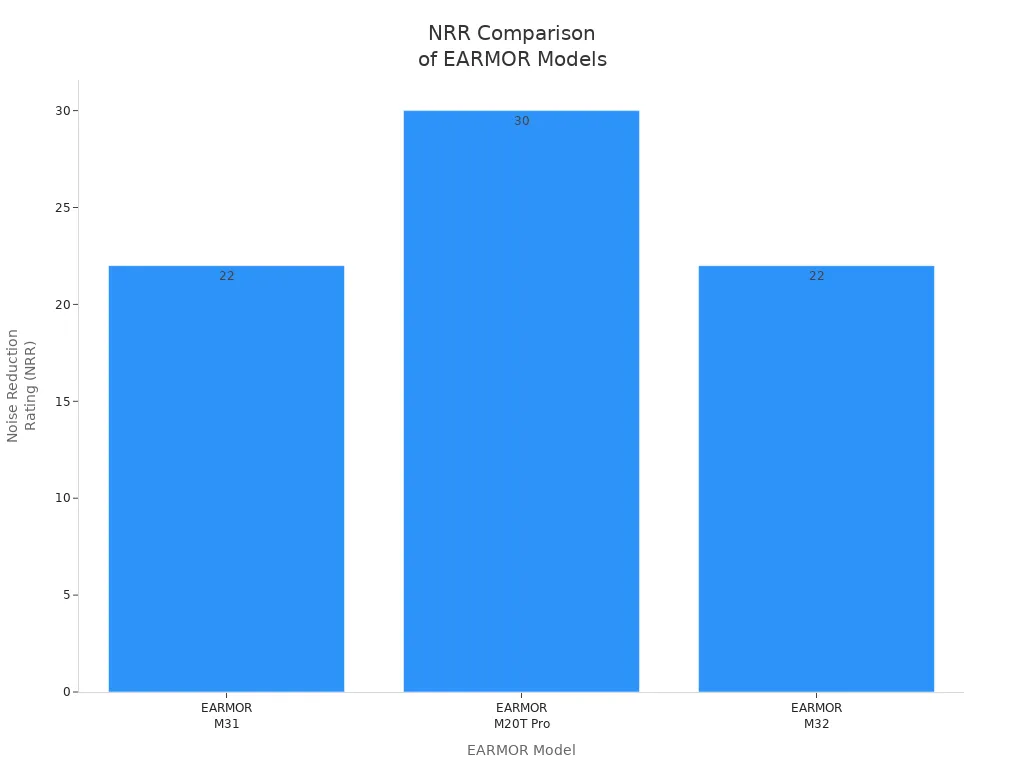
Let’s look at some top choices for professional-grade hearing protection:
|
Feature |
EARMOR M31 |
EARMOR M20T Pro |
EARMOR M32 |
|---|---|---|---|
|
Noise Reduction Rating (NRR) |
22 |
30 |
22 |
|
Communication Capabilities |
Amplifies voices, dual ambient mics |
Bluetooth connectivity |
Boom mic, connects to PTT |
|
Comfort |
Padded headband, soft ear pads |
Proprietary ear tips, portable case |
Gel ear cushions, modular design |
|
Battery Life |
350 hours |
10 hours |
N/A |
|
Waterproof Rating |
IPX-5 |
N/A |
N/A |
|
Additional Features |
3.5 mm aux input |
Three listening modes |
Dynamic tracking, EMI shielding |
-
EARMOR M31 gives you voice amplification, adjustable volume, automatic sound compression, and a waterproof design. You get up to 350 hours of battery life, so you can shoot all season.
-
EARMOR M20T Pro offers Bluetooth hearing protection, high noise reduction, and a portable charging case. You can switch between three listening modes for different shooting situations.
-
EARMOR M32 is built for tactical communication. It has a detachable microphone, gel ear cushions for comfort, and a modular design for long days at the range.
Note: Electronic earmuffs let you talk with your friends and hear range commands without taking off your hearing protection. This keeps you safe and focused, especially when you shoot with a group.
If you want the best mix of safety, comfort, and awareness, electronic earmuffs are a smart choice. They work well for both new shooters and experienced pros. You can use them alone or with earplugs for even more protection.
Quick Comparison Table
|
Type |
Pros |
Cons |
|---|---|---|
|
Foam Earplugs |
Cheap, disposable, easy to use |
Single-use, can be tricky to fit |
|
Silicone Earplugs |
Reusable, washable, custom fit possible |
Need cleaning, may cost more |
|
Passive Earmuffs |
Durable, easy to use, good protection |
Bulky, muffles all sounds, can get hot |
|
Electronic Earmuffs |
Amplifies voices, allows communication, advanced features |
Needs batteries, higher price |
No matter which type you choose, always use hearing protection every time you shoot. Your ears will thank you for years to come.
Noise Reduction Rating (NRR) Explained
NRR for Shooting
When you pick out hearing protection, you will see a number called the Noise Reduction Rating, or NRR. This number tells you how much sound the device can block. The higher the NRR, the more your hearing stays safe. You measure NRR in decibels (dB), which is the same unit used for sound levels.
Here’s a quick look at how experts test and rate NRR:
|
Aspect |
Description |
|---|---|
|
Measurement Unit |
Decibel (dB) |
|
Testing Environment |
Controlled laboratory settings |
|
Compliance Standards |
Devices tested under OSHA guidelines |
|
NRR Functionality |
Shows how well hearing protection works |
|
Fit Importance |
NRR assumes a proper fit for most people |
|
Variability Consideration |
Fit can change results by up to 50% |
|
Testing Standard |
ANSI S3.19-1974 |
You need hearing protection in places where noise is 85 dB or higher. Shooting sports often go way above this. For example, if you use earplugs with a 30 dB NRR, you can drop an 85 dB noise down to 55 dB. That keeps your hearing below the danger zone.
Tip: Always check the NRR before you buy new gear. A higher NRR means better protection for your ears.
Combining Protection
Sometimes, one layer of hearing protection is not enough. You can wear earplugs and earmuffs together for extra safety. This works best when you shoot high-caliber guns or spend time at loud indoor ranges.
-
Using both earplugs and earmuffs gives you more noise reduction than using just one.
-
This combo is great for very loud places, like gun ranges.
-
The total noise reduction is not just the sum of both NRRs. Usually, you get about 5 dB more than the higher NRR.
Here’s a table to show how combining works:
|
Protection Method |
Noise Reduction Rating (NRR) |
|---|---|
|
Earplugs |
Around 25 |
|
Earmuffs |
Around 30 |
|
Combined |
About 36 |
If you want the best hearing protection, try using both together. Your hearing will stay safer, even in the loudest shooting spots.
Best Kinds of Hearing Protection for Different Scenarios
Target Practice
You should protect your hearing every time you shoot at the range. For target practice, you can pick from different options. Earplugs are simple and good for short visits. High-end earplugs can block noise almost as well as earmuffs. Be careful with high-caliber guns because earplugs may not be enough. Passive earmuffs cover your ears and block loud sounds. They give about 30% more protection than earplugs. It can be hard to talk to others when you wear them. Electronic earmuffs are the best if you want to hear voices and range commands. They block gunshots but let safe sounds through.
-
Earplugs: Simple to use, good for quick trips.
-
Electronic earmuffs: Best for group safety and focus.
Tip: Electronic earmuffs help you stay alert and keep your hearing safe during target practice.
Sport Shooting
Sport shooting needs hearing protection that keeps you safe and helps you perform well. You spend more time at the range and need to hear commands. Electronic earmuffs let you hear quiet sounds and block loud ones. This helps you stay focused and react fast. SureFire EP7 Sonic Defenders Ultra earplugs have a 28-dB noise reduction rating. They let you stay aware of what is happening around you. Passive earmuffs protect your hearing but make it hard to hear important sounds. For the most noise reduction, you can use earplugs and earmuffs together. Comfort and fit are important for long sessions. Look for gear that lets you talk to your team.
-
Electronic earmuffs: Make voices louder, block gunshots, great for competitions.
-
SureFire EP7 earplugs: Good noise reduction, help you stay aware.
-
Passive earmuffs: Strong protection, not great for team events.
Hunting
Hunting needs hearing protection that keeps you safe and aware. Advanced devices stop hearing loss and help with tinnitus. Electronic hearing protection lets you hear animals and talk to other hunters. You can focus on sounds like leaves rustling or animal calls. These devices also make long trips easier and help groups stay safe.
-
Helps with tinnitus
-
Lets you focus on animal sounds
-
Makes it easier to talk to other hunters
-
Adds comfort for long hunts
Electronic hearing protection makes soft sounds louder and gunshots quieter. You stay aware and protect your hearing while hunting.
Advanced Gear and Upgrading Protection
Electronic Features
You want hearing protection that does more than block noise. Electronic earmuffs now have cool features. Some have Bluetooth, sound amplification, and even ways to talk with your team. EARMOR M31, M20T, and M32 are known for their advanced technology. You can make voices and commands louder, so you do not miss anything important. Bluetooth lets you answer calls or listen to music while shooting. The M32 has a boom mic for clear team talks. Comfort is important, too. Gel ear cushions and adjustable headbands help you wear them all day without hurting your ears.
Here is a quick look at some new features:
|
Product Name |
Key Features |
|---|---|
|
EARMOR M31 |
Makes voices louder, waterproof, long battery |
|
EARMOR M20T |
Bluetooth, portable charging, three modes |
|
EARMOR M32 |
Team talking, gel cushions, modular design |
|
Walker Razor series |
Makes sounds louder, tough design |
|
Decibullz SAFE + SOUND |
Custom fit, Bluetooth, blocks loud sounds |
Electronic earmuffs let you hear people and commands but still keep your ears safe from gunshots.
Situational Awareness
Situational awareness is very important when you shoot. You need to hear commands and talk to your group. Electronic earmuffs help you stay alert by making safe sounds louder and blocking loud noises. This technology helps you react faster and keeps you focused. You can hear footsteps, voices, and even animals if you hunt. Advanced hearing protection helps you know what is happening around you. This is important for safety and doing well.
-
Makes voices and commands louder
-
Helps you react fast
-
Makes group talking easier
Upgrade Timing
You should get new hearing protection if your old gear feels bad, does not work well, or does not have new features. Technology changes quickly. New models have better sound, Bluetooth, and custom fit options. If you shoot a lot or with others, you need hearing protection that helps you talk and keeps your ears safe. Upgrading gives you more comfort and helps you stay aware. Custom fits are now easier to get and cost less. Military and European ideas have made advanced hearing protection easy for everyone to buy.
If you want to keep your hearing safe and shoot better, get new hearing protection when your old gear is not comfortable or is missing new features.
Supplementary Methods and Limitations
Suppressors
Some people think a suppressor, or silencer, makes shooting safe for your ears. Suppressors do make guns quieter, but not quiet enough to skip hearing protection. When you use a suppressor, it lowers the sound by 17 to 28 decibels. The amount depends on where you stand and how you measure the sound.
|
Measurement Type |
Sound Reduction (dB) |
|---|---|
|
Peak Sound Pressure Level (Ear) |
17 - 24 |
|
Instructor Position Noise Reduction |
20 - 28 |
Suppressors work best when you use them with other safety steps. Even with a suppressor, gunshots can still be very loud. The noise can reach 120 to 140 decibels. That is loud enough to hurt your ears. Some people think suppressors make shooting safe without ear protection, but that is not true. You still need to wear earmuffs or earplugs every time you shoot.
-
Suppressors make gunshots quieter.
-
They do not replace hearing protection.
-
Shooting a lot, even with a suppressor, can still hurt your ears.
Subsonic Ammunition
Subsonic ammunition moves slower than the speed of sound. This makes it quieter than regular bullets. You might hear less noise, especially with subsonic .22 loads. These can be between 68 and 120 decibels, depending on the type. That is better, but it is still not safe if you shoot a lot.
Subsonic ammo helps lower the sharp sound of a gunshot, but it does not make shooting safe. The noise can still be loud enough to cause hearing loss. You should always wear hearing protection, even with subsonic rounds.
Tip: For the best safety, use electronic hearing protection with suppressors or subsonic ammo. This keeps your ears safe and helps you hear what is happening around you.
-
Suppressors and subsonic ammo make guns quieter.
-
You still need hearing protection every time you shoot.
-
Using both methods together gives you the best chance to keep your hearing safe.
Special Considerations for Hearing Loss
If you already have hearing damage, you need to take extra steps when you shoot. You can still enjoy shooting, but you must focus on protecting your hearing every time you pick up a firearm. Let’s look at what you can do to stay safe.
Dual Protection
You want the best defense against loud gunshots. Dual protection means you use both earplugs and earmuffs together. This combo gives you the highest noise reduction possible. Foam or silicone earplugs fit snugly in your ears and block a lot of sound. When you add electronic earmuffs, you get even more protection and can still hear voices or commands.
-
Use earplugs and earmuffs at the same time for maximum safety.
-
Make sure your earplugs fit well and seal your ear canal.
-
Electronic earmuffs help you hear important sounds while blocking gunshots.
Dual protection works best for shooters with hearing damage. You get strong noise reduction and can stay aware of your surroundings.
Safety After Damage
If you have hearing damage, you need to change your safety habits. You should always use high-quality hearing protection. This helps prevent more hearing loss. If you notice ringing in your ears or trouble hearing, talk to an audiologist or doctor. They can help you make a plan to protect your hearing.
-
Choose the best hearing protection you can find.
-
Seek medical advice if you have symptoms like tinnitus.
-
Limit your time around loud noises and control the sound levels where you shoot.
Protecting your hearing is important, especially after hearing damage. You can still enjoy shooting if you follow these steps and use the right gear.
You can stay safe and keep shooting by using dual protection and following new safety rules. Take care of your ears so you can keep enjoying the sport.
You can protect your hearing for life by using quality hearing protection every time you shoot. Gunshots are much louder than you think. Even one shot can cause permanent hearing loss or tinnitus. Advanced gear helps you stay safe and sharp on the range.
“I was able to hear whispers from the point man at the front, as well as echoed information being called out from approximately four operators behind me.”
Take these steps to upgrade your safety:
-
Check your gear’s noise reduction rating (NRR).
-
Make sure your hearing protection fits well.
-
Choose an NRR of 25 or higher for most shooting, and 30+ for louder guns.
Investing in your hearing means you can enjoy shooting for years to come.
FAQ
How often should you replace your hearing protection?
You should check your hearing protection every few months. If you see cracks or the fit feels loose, it’s time to get new gear. Foam earplugs are single-use, so toss them after each session.
Can you use regular headphones for shooting?
No, regular headphones do not block gunshot noise. You need hearing protection made for shooting, like earmuffs or earplugs with a high NRR. This keeps your ears safe from loud sounds.
What is the best NRR for shooting?
Look for hearing protection with an NRR of 25 or higher. If you shoot indoors or use high-caliber guns, aim for 30 or more. Higher NRR means better safety for your ears.
Do electronic earmuffs work for group shooting?
Yes! Electronic earmuffs let you hear voices and commands while blocking gunshots. You can talk to your friends and stay safe at the same time. This makes group shooting easier and safer.
Can you wear glasses with earmuffs?
You can wear glasses with earmuffs. Make sure the earmuff seal stays tight around your ears. Some models have soft pads that fit well with glasses, so you stay comfortable and protected.